
Types of Dental Night Guards: Soft, Hard, Hybrid & Occlusal Splints
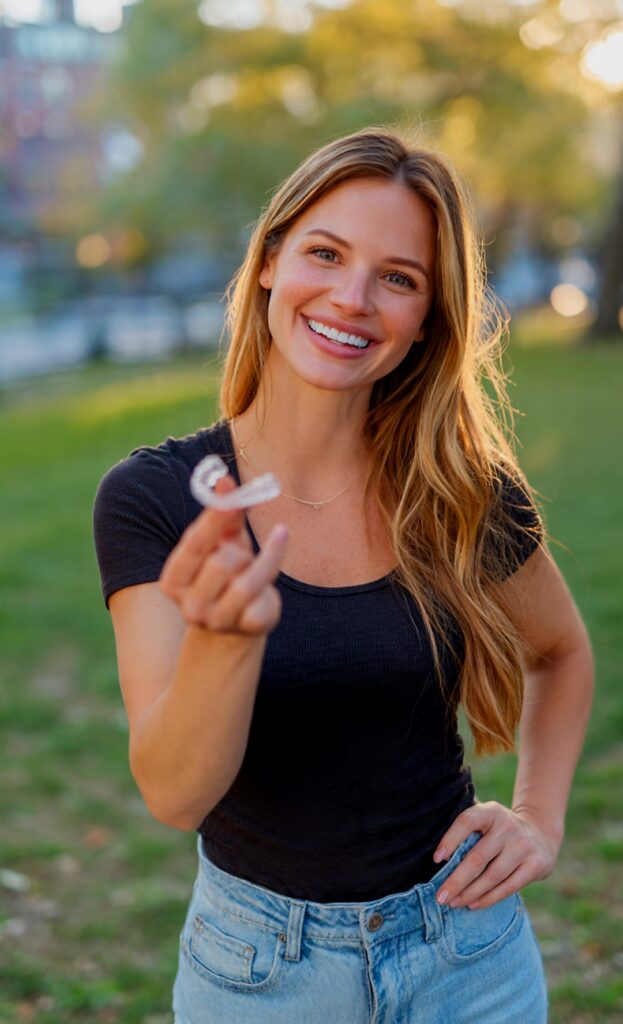
A dental night guard is an appliance worn over the teeth, most commonly during sleep, to create a protective interface between the upper and lower arches.
Night guards are often used when bruxism—grinding or clenching—is contributing to tooth wear, fractures or damage to dental restorations. They may also be called occlusal guards, bruxism splints or occlusal splints.
But not every night guard is the same.
They can differ in:
- Material
- Rigidity
- Thickness
- Upper or lower placement
- Amount of tooth coverage
- Shape of the biting surface
- Method of fabrication
- Ability to be professionally adjusted
These differences matter because the most appropriate appliance depends on the patient’s teeth, existing dental work, bite, wear pattern and reason for using the guard.
A night guard should not automatically be considered a cure for bruxism. Its most established role is to separate and protect the teeth from direct grinding contact, and some appliances may also influence jaw-muscle activity.
If you are looking for a professionally fabricated appliance rather than an overview of the different designs, visit our Custom Night Guards in Kitchener.
Why Are There Different Types of Night Guards?
A patient with mild wear on otherwise natural teeth may have very different restorative needs from someone who:
- Has severely worn teeth
- Repeatedly fractures restorations
- Has crowns, bridges or implants
- Has limited restorative space
- Has missing teeth
- Finds certain appliance materials difficult to tolerate
- Has a complex bite
- Has previously broken or worn through an appliance
There is therefore no single material or design that is automatically “the best night guard.”
Research comparing different occlusal splints has not established a simple rule in which one appliance type is universally superior for managing sleep bruxism. Appliance effects and tolerability vary, and treatment needs to be individualized.
Soft Night Guards
A soft night guard is fabricated from a flexible material rather than rigid acrylic.
Because the material flexes, patients may initially find these appliances less rigid or intrusive than a hard guard.
Potential Advantages
Soft appliances may offer:
- A flexible feel
- Easier initial adaptation for some patients
- Protection from direct tooth-to-tooth contact
- A relatively simple appliance design
Potential Limitations
Soft materials can behave differently under chewing and grinding forces.
Depending on the patient and material, they may:
- Wear or distort
- Be less suitable for precise adjustment of occlusal contacts
- Develop surface damage with heavy use
- Require replacement when the material is no longer maintaining its intended form
It would be overly simplistic to say that soft guards are for mild grinders and hard guards are for severe grinders.
The appropriate material depends on the entire clinical situation, not simply a mild/moderate/severe label.
Hard Acrylic Night Guards
A hard night guard is generally made from a rigid dental material such as acrylic.
Because the biting surface is firm, it can be shaped and adjusted so the opposing teeth contact the appliance in a deliberate way.
Hard acrylic appliances are commonly used when the dentist wants:
- A rigid protective surface
- Stable tooth coverage
- Precise adjustment of occlusal contacts
- A material that can be inspected for wear
- An appliance suitable for significant restorative dentistry
- The ability to modify the surface as the bite is evaluated over time
A rigid appliance does not, however, automatically stop bruxism or retrain the jaw into a permanent new position.
Systematic reviews have found insufficient or inconsistent evidence that conventional occlusal splints eliminate sleep-bruxism activity itself.
Their clinical value can instead lie in providing a controlled protective interface between the teeth.
What Is a Stabilization Splint?
You may also hear terms such as:
- Stabilization splint
- Flat-plane splint
- Michigan splint
- Occlusal stabilization appliance
These generally describe a full-coverage appliance with a relatively smooth biting surface that can be adjusted to provide controlled contacts with the opposing teeth.
Rather than locking the opposing teeth into individual indentations, the dentist can evaluate how the teeth contact the appliance during closure and jaw movement.
A stabilization appliance may be used in selected patients with bruxism or other clinical indications, but it should not be marketed as a guaranteed way to cure TMD, stop grinding or permanently change jaw position. Evidence regarding splints and TMD pain remains limited.
Hybrid or Dual-Laminate Night Guards
A hybrid, sometimes called a dual-laminate night guard, combines materials with different properties.
A typical design may have:
- A softer surface facing the teeth
- A firmer external biting surface
The concept is to combine aspects of flexibility and rigidity within one appliance.
For some patients, this can provide a useful balance between comfort, retention and a firmer opposing surface.
Potential considerations include:
- Material thickness
- Long-term wear
- Separation of material layers
- Ability to adjust the biting surface
- Patient tolerance
- Amount of grinding force
- Existing restorations
Hybrid does not automatically mean “best of both worlds,” nor has it been established as the preferred appliance for TMD.
It is simply another design option available when its material characteristics suit the clinical situation.
Hard vs. Soft Night Guard: Which Is Better?
There is no universal winner.
| Consideration | Soft Guard | Hard Guard |
|---|---|---|
| Feel | Flexible | Rigid |
| Occlusal adjustment | More limited depending on material | Usually allows precise adjustment |
| Tooth protection | Creates separation between teeth | Creates separation and a firm controlled surface |
| Wear pattern | May distort or abrade depending on material/use | Wear can often be evaluated on rigid surface |
| Comfort | Some patients prefer flexibility | Some prefer stability and thinner rigid designs |
| Best candidate | Individual assessment | Individual assessment |
The choice should therefore not be made solely according to which material sounds more comfortable.
A dentist considers what needs protection and how the appliance will function within the patient’s bite.
Upper vs. Lower Night Guards
Night guards can be made for either the upper arch (maxillary) or lower arch (mandibular).
Neither is universally better.
An upper appliance may be appropriate in one patient while a lower guard makes considerably more sense in another.
Factors influencing the choice include:
- Tooth position
- Missing teeth
- Retention
- Existing restorations
- Crowns or bridges
- Dental implants
- Available space
- Opposing dentition
- Bite relationships
- Comfort
- Patient preference
The decision is part of appliance design rather than a rule that every night guard should be placed on the upper teeth.
Full-Coverage vs. Partial-Coverage Night Guards
Another important difference is how many teeth the appliance covers.
Full-Coverage Appliances
A full-coverage guard generally covers all teeth in the selected arch.
This provides:
- Broad retention
- Protection across the dentition
- A surface that can be evaluated against the opposing teeth
- Reduced concern about individual uncovered teeth moving differently from covered teeth
Partial-Coverage Appliances
Some specialized appliances contact or cover only part of the dental arch.
These include certain anterior-only appliances.
Because partial-coverage appliances interact with the bite differently from full-coverage appliances, they require appropriate diagnosis, design and monitoring.
An appliance should not be used with the intention of unintentionally producing permanent tooth movement or bite changes. NIDCR specifically advises that intraoral appliances used for TMD should not be designed to permanently change the bite.
Anterior-Only Appliances
Anterior-only appliances generally separate the posterior teeth while allowing contact primarily in the front of the mouth.
Different commercial and clinical designs exist.
These devices may influence the pattern of jaw-muscle activity and occlusal contact, but they are not simply miniature universal night guards.
Because they do not cover the entire dentition, they require professional monitoring for:
- Tooth movement
- Changes in occlusion
- Appliance wear
- Symptoms
- Continued clinical indication
The old claim that these appliances reduce clenching force by exactly 66% is much more precise than the evidence justifies, so we would not present that number to patients.
Custom Night Guard vs. Over-the-Counter Guard
Night guards are available both professionally and over the counter.
Over-the-Counter Guards
OTC products may include:
- Preformed guards
- Boil-and-bite appliances
- Soft thermoplastic guards
Their principal advantage is accessibility.
However, the appliance is based on a standardized product rather than a professional digital record or impression of the individual patient’s teeth.
Custom Dental Night Guards
A dentist-made appliance can be fabricated using records of the patient’s actual dentition and can then be clinically evaluated for:
- Fit
- Retention
- Tooth coverage
- Thickness
- Occlusal contact
- Interferences during jaw movement
- Relationship with crowns, bridges, implants and other restorations
The important distinction is therefore not that every custom appliance is automatically perfect or that every OTC appliance is dangerous.
It is that a custom appliance can be prescribed, fabricated, fitted and adjusted for an individual patient’s mouth.
Why Bite Adjustment Matters
A night guard should do more than simply snap over the teeth.
After fabrication, the dentist can evaluate how the opposing teeth contact its surface.
High or uneven contacts may be adjusted where appropriate.
This becomes particularly important when a patient has:
- Extensive tooth wear
- Crowns
- Bridges
- Veneers
- Implant restorations
- Multiple large fillings
- An irregular occlusal relationship
The appliance may also require adjustment later if the patient’s teeth or dental restorations change.
Do Night Guards Stop Bruxism?
Not necessarily.
This is one of the most important misconceptions about night guards.
A guard can prevent the upper and lower teeth from directly grinding against one another, thereby helping protect teeth and restorations.
But the patient may still continue to generate grinding or clenching activity while wearing it.
NIDCR describes intraoral appliances as separating the teeth to prevent damage and notes that they may reduce muscle activity. Reviews of clinical trials have found that evidence for actually treating or eliminating sleep bruxism is much less certain.
So the more accurate goal is:
Protect the teeth from the consequences of bruxism rather than promise to eliminate bruxism itself.
Do Night Guards Help TMD?
Sometimes patients with TMD symptoms are prescribed intraoral appliances, but bruxism and TMD are not the same condition.
TMD describes a group of disorders affecting the temporomandibular joints, chewing muscles and related structures. Clicking alone without pain is also common and does not necessarily represent a disorder requiring treatment.
The evidence that night guards reliably improve TMD pain is limited, which is why persistent jaw pain, locking, restricted movement or other symptoms should be properly evaluated rather than assuming that a bruxism guard is automatically the solution.
For more detail, see our guide to Bruxism, Jaw Clenching and TMD.
What About a Sports Mouthguard?
A sports mouthguard and a night guard may both cover teeth, but they are designed around different clinical problems.
A sports mouthguard is principally intended to help protect oral structures during impact.
A bruxism guard is designed around forces created by clenching or grinding during use.
For that reason, one should not automatically be substituted for the other.
How Is the Right Night Guard Selected?
Rather than choosing a guard from a chart based solely on “mild,” “moderate” or “severe” grinding, we consider the patient as a whole.
Assessment may include:
Tooth Wear
Where is the wear occurring, and is it consistent with bruxism?
Existing Restorations
Crowns, veneers, fillings, bridges and implants can affect appliance design.
Tooth Position and Missing Teeth
The available dentition influences retention and coverage.
Bite Relationships
The opposing teeth need to interact appropriately with the appliance.
Previous Appliances
Has the patient worn through, fractured or been unable to tolerate another guard?
Comfort and Compliance
A theoretically excellent appliance provides little benefit if the patient cannot wear it consistently.
Clinical Objective
Are we mainly protecting natural enamel? A recently restored dentition? Implant restorations? Repeatedly fractured restorations?
The answers help determine the material and design.
How Long Does a Night Guard Last?
There is no clinically meaningful universal lifespan for a night guard.
Two patients wearing similar appliances can produce dramatically different amounts of wear.
Longevity can depend on:
- Material
- Appliance thickness
- Grinding intensity
- Frequency of use
- Bite forces
- Existing restorations
- Cleaning and storage
- Changes to the teeth
- Accidental damage
Instead of promising six months, five years or ten years, the appliance should be periodically inspected and replaced when its fit, structure or protective function has deteriorated.
How Should a Night Guard Be Cleaned?
Care instructions can vary somewhat according to the material.
Generally:
- Rinse the appliance after use
- Clean it according to the instructions supplied for that material
- Allow it to dry appropriately before storage
- Store it in its protective case
- Avoid excessive heat that could distort thermoplastic materials
- Inspect it periodically for cracks or wear
Bring your night guard to routine dental visits so it can be checked along with your teeth and restorations.
And keep it away from dogs.
For reasons known only to dogs, a custom dental appliance apparently tastes considerably better than actual dog food. 😂
Which Type of Night Guard Is Best?
The answer is not simply:
soft for mild grinding, hybrid for moderate grinding and hard for severe grinding.
Real clinical decision-making is more nuanced.
The appropriate appliance depends on:
- What is happening to the teeth
- The patient’s bite
- Existing dental work
- Appliance retention
- Available space
- Material properties
- Previous experience
- Patient comfort
- The objective of treatment
Research comparing occlusal appliance designs has not established one universally superior type for every patient with sleep bruxism.
The goal is therefore to select an appliance that protects the dentition, can be appropriately fitted and adjusted, and is realistic for the patient to wear.
Custom Night Guards at MI Dental
If you are considering a night guard because of tooth grinding, clenching, worn teeth or repeated damage to dental restorations, the first step is to determine whether an appliance is appropriate and what it needs to protect.
At MI Dental in Kitchener, we assess your teeth, restorations and bite and use digital records when fabricating custom appliances.
Learn more about our Custom Night Guards in Kitchener or book an appointment to have your teeth and existing dental work evaluated.
Frequently Asked Questions
What are the main types of night guards?
Dental night guards can broadly vary by material—such as soft, rigid or dual-laminate—and by design, including upper or lower, full-coverage, flat-plane and selected partial-coverage appliances.
Is a hard night guard better than a soft night guard?
Not automatically. Hard appliances allow precise adjustment of a rigid biting surface, while softer materials have different comfort and handling characteristics. The most appropriate choice depends on the patient and the purpose of the appliance.
What is a hard acrylic night guard?
It is a rigid custom appliance made from dental acrylic or a similar hard material. Its surface can be adjusted to control how the opposing teeth contact the guard.
Is an upper night guard better than a lower one?
No universal rule applies. Retention, tooth position, existing restorations, bite, available space and patient comfort can influence which arch is selected.
What is a hybrid night guard?
A hybrid or dual-laminate appliance combines materials with different properties, often using a more flexible tooth-facing component and a firmer outer surface.
Are flat-plane splints only for severe bruxism?
No. Appliance design should not be assigned solely according to a mild/moderate/severe bruxism label. A flat-plane stabilization appliance is one design that allows controlled adjustment of occlusal contacts.
Can a night guard cure bruxism?
No appliance can be guaranteed to eliminate bruxism. Night guards are commonly used to protect the teeth and restorations from its mechanical consequences.
Can a night guard cure TMD?
No. TMD includes many different conditions, and evidence that intraoral appliances consistently improve TMD pain is limited. Patients with significant jaw symptoms should be evaluated according to the specific problem.
Can I use a sports mouthguard at night?
Sports and bruxism appliances are designed for different purposes, so a sports guard should not automatically be substituted for a properly selected night guard.
How long does a night guard last?
There is no fixed lifespan. Material, grinding forces, appliance design and care all influence wear. Replacement is appropriate when the appliance becomes damaged, excessively worn or no longer fits and functions as intended.


