
Zirconia Dental Crowns: Strength, Esthetics & Clinical Uses
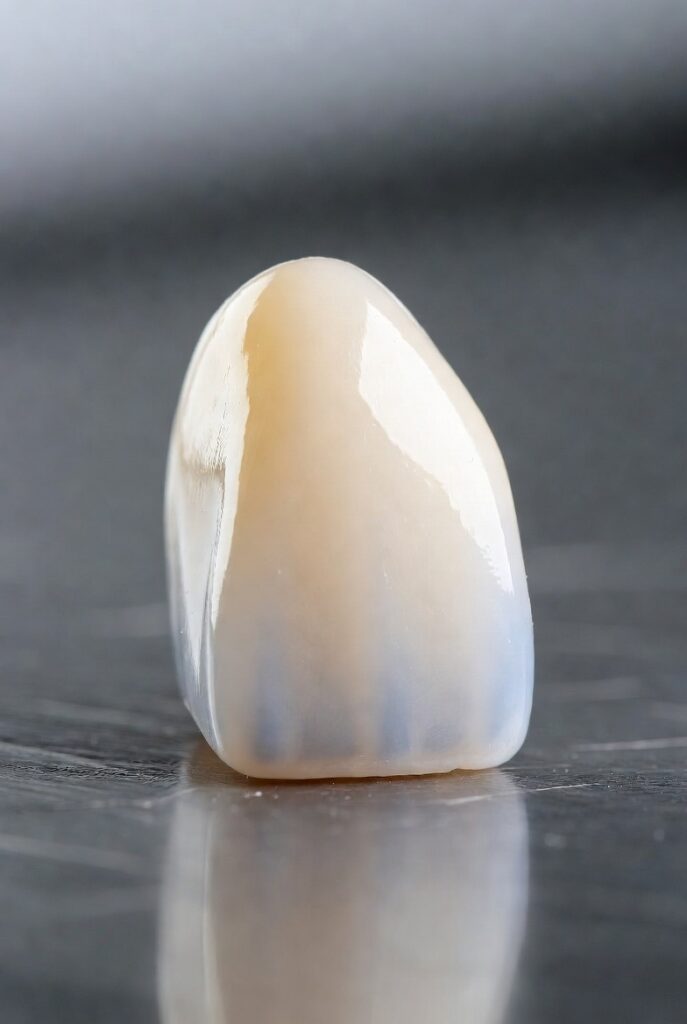
Zirconia has become one of the most widely used ceramic materials for modern dental crowns. Its combination of strength, fracture resistance and increasingly natural appearance makes it particularly useful when a tooth requires substantial protection but an all-ceramic restoration is preferred.
A zirconia crown covers the prepared portion of a damaged or weakened tooth and restores its shape, function and appearance. Depending on the clinical situation, zirconia may be used for posterior teeth exposed to substantial chewing forces, anterior teeth where strength and esthetics must be balanced, or certain implant-supported restorations.
Zirconia is not necessarily the best crown material for every tooth. Material selection should take into account the amount of remaining tooth structure, location in the mouth, bite forces, available restorative space, esthetic requirements and how the crown will be retained.
Learn more about dental crowns and material selection at MI Dental.
What Is a Zirconia Crown?
Dental zirconia is a high-strength ceramic based on zirconium dioxide. Unlike a porcelain-fused-to-metal crown, a zirconia restoration does not require an internal metal framework.
One reason zirconia performs well mechanically is a phenomenon known as transformation toughening. In certain forms of zirconia, stress around a developing crack can trigger changes within the ceramic’s crystal structure that help resist further crack propagation.
This contributes to zirconia’s fracture resistance, but it does not make the material unbreakable. Crown design, material formulation, restoration thickness, bite forces, surface condition and laboratory fabrication all influence clinical performance.
Modern zirconia is also available in several formulations with different balances of strength and translucency. More translucent versions may provide improved esthetics, while higher-strength zirconias may be advantageous in areas exposed to greater functional demands.
Not All Zirconia Is the Same
The term zirconia crown describes a family of dental ceramics rather than one single material.
Earlier zirconias were exceptionally strong but comparatively opaque. They worked well in posterior areas but could be less suitable when highly natural translucency was required.
Newer formulations incorporate changes in crystal composition that allow more light to pass through the material. This has considerably improved the appearance of modern zirconia crowns.
There is, however, a trade-off: increasing translucency can reduce some of the mechanical properties that made traditional zirconia exceptionally strong. For this reason, the dentist and dental laboratory select the zirconia formulation according to the demands of the individual restoration rather than simply choosing the most translucent material available.
Monolithic and Layered Zirconia Crowns
Zirconia crowns can be fabricated in different ways.
Monolithic Zirconia
A monolithic crown is milled primarily from a single block of zirconia. Because there is no separate outer layer of veneering porcelain over most or all of the restoration, the risk of porcelain chipping is reduced.
Monolithic zirconia is commonly considered for posterior teeth where strength and durability are important.
Layered Zirconia
In a layered restoration, zirconia forms the underlying framework while porcelain or another ceramic is added to portions of the surface to enhance color, translucency and characterization.
Layering can provide additional esthetic possibilities, but the veneering ceramic introduces another potential source of chipping.
Modern highly translucent and multilayered monolithic zirconias have reduced the need for extensive porcelain layering in many situations. Current clinical evidence generally shows lower rates of ceramic chipping with monolithic designs than with veneered zirconia restorations.
When Might a Zirconia Crown Be Recommended?
Zirconia may be considered when a tooth requires full-coverage protection and the clinical situation calls for a combination of strength and esthetics.
Possible applications include:
- posterior teeth exposed to substantial chewing forces
- teeth with large existing restorations or significant structural loss
- cracked or weakened teeth when a crown is otherwise indicated
- certain teeth in patients with heavy bite forces or bruxism
- situations where an all-ceramic restoration is preferred
- replacement of selected older crowns
- certain implant-supported crowns and bridges
The presence of heavy bite forces or bruxism does not make any crown immune to complications. Occlusion, restoration design and management of parafunctional forces remain important regardless of the restorative material chosen.
When Might Another Crown Material Be Better?
Zirconia’s strength does not automatically make it the ideal choice for every restoration.
For a highly visible anterior tooth where achieving enamel-like translucency is the dominant priority, a glass ceramic such as lithium disilicate may sometimes provide advantages.
Other factors can also influence material selection, including:
- the amount of tooth reduction available
- preparation design
- ability to obtain adequate retention
- the shade and color of the underlying tooth
- location of the crown margin
- opposing restorative materials
- the patient’s bite
- whether adhesive bonding is desirable
This is why choosing a crown material is fundamentally a clinical decision, rather than simply selecting the material with the highest laboratory strength.
How Zirconia Crowns Are Made
Most contemporary zirconia restorations are produced using a digital CAD/CAM workflow.
After the tooth has been prepared, the dental laboratory works from a digital scan or conventional impression to design the restoration. The crown is then milled from a zirconia blank in a partially processed state.
After milling, the restoration undergoes a controlled high-temperature sintering process, during which the material reaches its final density and dimensions. The crown may then be stained, characterized, polished or glazed according to its location and esthetic requirements.
Digital manufacturing can produce highly accurate restorations, but a successful crown still depends on much more than the milling machine. Preparation design, impression or scan quality, laboratory technique, proximal contacts, occlusion and careful clinical evaluation at insertion all contribute to the final fit.
Zirconia and the Opposing Teeth
Because zirconia is a very hard ceramic, patients sometimes wonder whether it can wear the natural tooth that bites against it.
The answer depends considerably on the surface finish of the zirconia.
Research indicates that a well-polished zirconia surface generally produces less opposing enamel wear than a roughened or inadequately finished surface. Clinical studies have also found greater antagonist wear against glazed zirconia compared with carefully polished zirconia in some circumstances.
This becomes especially important if a zirconia crown requires occlusal adjustment after fabrication. Any adjusted ceramic surface should be appropriately finished and polished rather than being left rough.
Do Zirconia Crowns Look Natural?
Modern zirconia can produce very attractive dental restorations.
Today’s translucent and multilayered zirconias can incorporate variations in color and translucency through the thickness of the crown, allowing a more natural transition from the cervical area toward the incisal or occlusal portion.
Nevertheless, no single ceramic reproduces every optical property of natural enamel in every clinical situation.
For posterior teeth, highly esthetic monolithic zirconia can often provide an excellent balance of strength and appearance. For demanding anterior situations, the dentist may compare zirconia with other ceramic options before deciding which material can best reproduce the neighboring teeth.
Are Zirconia Crowns Metal-Free?
Zirconia used for dental crowns is a ceramic material and does not require a metal framework.
This distinguishes it from porcelain-fused-to-metal crowns, in which ceramic is layered over a metallic substructure.
For most patients, however, crown selection should be based primarily on the clinical requirements of the tooth rather than on a general assumption that a metal-free material is automatically superior.
How Long Do Zirconia Crowns Last?
Zirconia crowns have demonstrated high survival rates in clinical studies, including results comparable with established metal-ceramic restorations over medium-term follow-up. Recent systematic-review evidence also supports favorable five-year survival for both monolithic and appropriately designed zirconia-based crowns.
That does not mean a zirconia crown has a predetermined lifespan.
Long-term success depends on factors such as:
- the condition and amount of remaining tooth structure
- preparation and crown design
- fit and cementation
- bite forces and bruxism
- oral hygiene
- recurrent decay at the crown margin
- periodontal health
- trauma
- regular dental assessment
The zirconia itself may be extremely resistant to fracture while the underlying tooth can still develop decay, fracture, periodontal problems or other complications.
Caring for a Zirconia Crown
A crowned tooth should be maintained much like the rest of the dentition.
Brush twice daily, clean between the teeth with floss or another appropriate interdental aid, and attend regular dental examinations and professional cleanings.
Patients who clench or grind their teeth may also be advised to use a night guard when clinically appropriate. The purpose is not only to protect the crown but also to help reduce excessive forces on the surrounding teeth and restorations.
Zirconia Crown FAQs
Can a zirconia crown chip or break?
Yes, although fractures are relatively uncommon when the material and restoration design are appropriate. Monolithic zirconia eliminates much of the veneering porcelain responsible for chipping in older layered zirconia restorations, but no dental ceramic is fracture-proof.
Are zirconia crowns good for back teeth?
They can be an excellent option for posterior teeth because zirconia provides high fracture resistance while allowing an all-ceramic restoration. The appropriate formulation and crown design depend on available space, bite forces and the condition of the tooth.
Can zirconia be used for front teeth?
Yes. Modern translucent zirconias can produce highly esthetic anterior crowns. In particularly demanding cosmetic situations, however, another ceramic such as lithium disilicate may sometimes provide optical advantages. Material selection should be individualized.
Is zirconia better than E.max?
Neither material is universally better.
Zirconia generally offers greater strength and fracture resistance, while lithium disilicate can provide excellent translucency and adhesive properties. The better material depends on the tooth being restored, remaining tooth structure, restoration thickness, bite forces and esthetic requirements.
Can zirconia crowns damage opposing teeth?
Any restorative material can contribute to wear of the opposing dentition. With zirconia, surface condition is particularly important. Properly finished and polished zirconia generally produces less opposing enamel wear than a rough surface, which is why careful polishing after any occlusal adjustment is important.
Choosing the Right Crown Material
Zirconia has expanded what can be achieved with all-ceramic dentistry, particularly when a restoration must withstand significant functional forces without relying on a metal framework.
Its greatest advantage is not that it is the “strongest” or “best” crown material for every patient. Its advantage is that modern zirconia gives dentists several different combinations of strength and esthetics that can be selected according to the needs of the individual tooth.
At MI Dental, crown material is chosen after evaluating the tooth, bite, restorative space, esthetic requirements and long-term prognosis rather than according to a single preferred material.
Learn more about dental crowns and the different restorative materials available at MI Dental.


